Sights in Slovenia: the most beautiful places for your holiday
Slovenia is a compact country full of surprises. Within just a few hours’ drive you swap turquoise lakes for alpine meadows, cave systems for waterfalls, and medieval castles for charming coastal towns. The sights lie close together and let you experience something different every day. This article guides you past Slovenia’s highlights, from famous icons to hidden gems that complete your holiday.
Why Slovenia is bursting with sights
Few countries offer so much variety in such a small area. Slovenia combines the Alps with the Mediterranean, underground rivers with castles clinging to rock faces. Within an hour you can drive from a mountain lake to a cave system, or from a gorge to a historic old town.
This compactness makes Slovenia ideal for a road trip. You do not need long drives to find variety. A week already gives you enough time for lakes, waterfalls, caves and cities. Two weeks allows more depth and relaxation.
Nature takes centre stage. Triglav National Park covers a fifth of the country. This is where you will find the alpine meadows, glacial lakes and mountain peaks that give Slovenia its character. But even outside the park you will find special places: gorges where emerald-green rivers flow through, waterfalls plunging from rock faces, and forests that take you back in time.
On top of that, Slovenia offers culture and history. Castles tell stories of knights and sieges. Museums show how the country was shaped. Cities such as Ljubljana and Piran have a great atmosphere. They are full of life.
This article leads you past the most beautiful sights. You will read about natural highlights such as Lake Bled, the Soča River and the Postojna Caves. You will discover gorges, waterfalls and national parks. And you will get practical tips to combine everything cleverly in your itinerary.
‘ Legend has it that your wish comes true when the bell rings. ’
Lake Bled: the icon of Slovenia
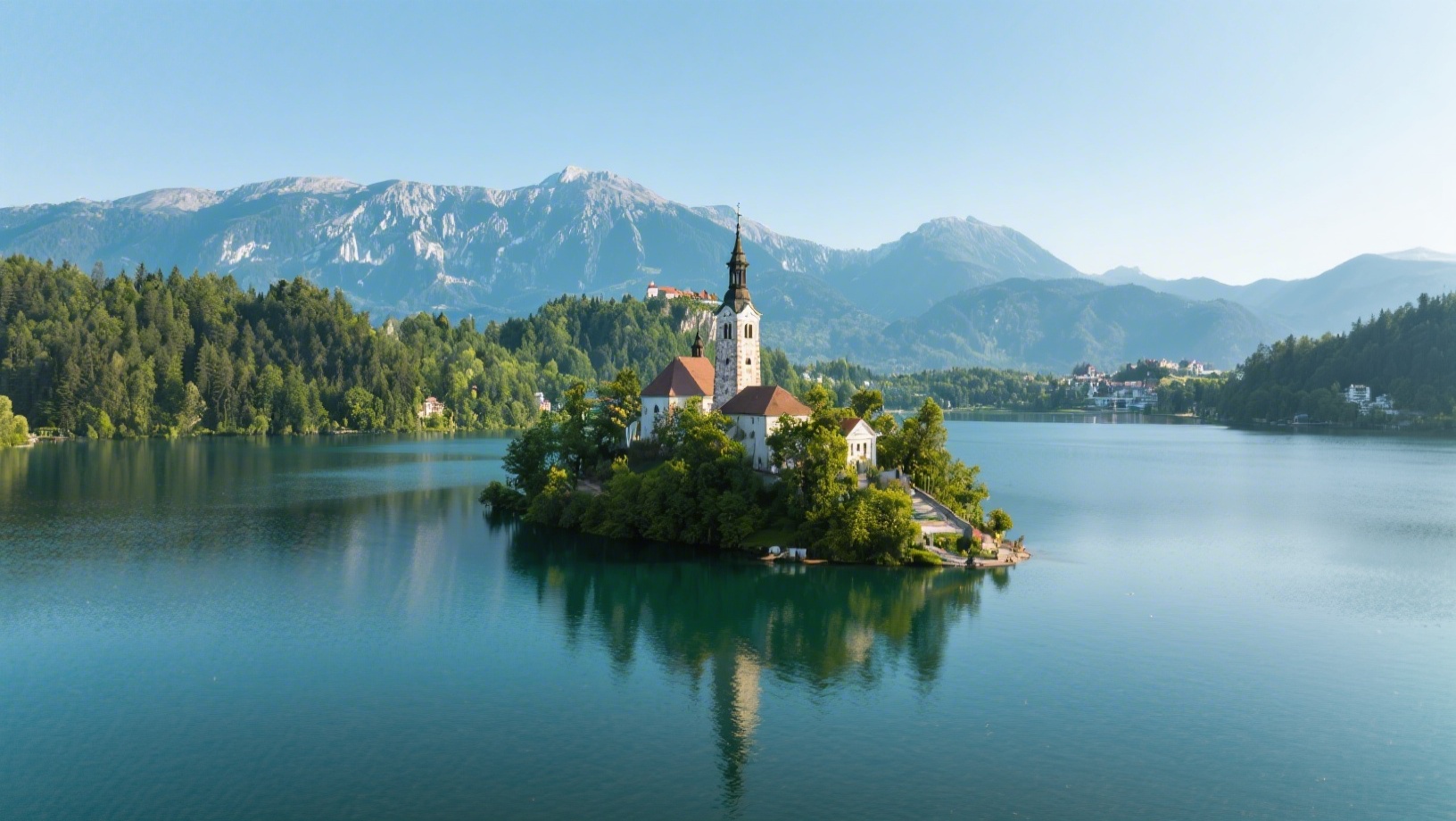
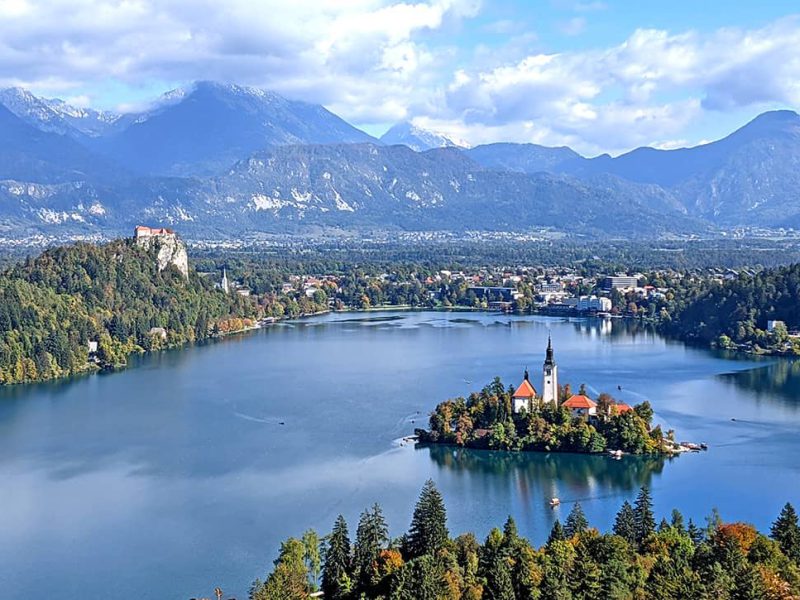
Lake Bled is the most photographed spot in Slovenia. The little island with its church in the middle of the lake creates a fairytale scene. Green hills rise up all around, crowned by Bled Castle on the top, looking out over the water.
You reach the island by traditional pletna boat. The oarsman takes you to the jetty, where a flight of 99 steps leads to the Church of the Assumption. Inside hangs a wishing bell that you are allowed to ring. Legend has it that your wish comes true when the bell rings.
Bled Castle stands on a rock 130 metres above the lake. The courtyard offers panoramic views over the water and the Julian Alps. Inside the castle you will find a museum about the history of Bled and a medieval printing press where you can make your own souvenir.
A six-kilometre walking path runs around the lake. The route is flat and suitable for everyone. Along the way you pass viewpoints such as the cliff at Ojstrica, where you can take the classic photo. Walking takes one and a half to two hours, depending on your pace and how many stops you make.
In summer you can swim in the lake. The water is clear and reaches temperatures of up to 24 degrees. In harsh winters the lake freezes over, and you can skate or go for a walk on the ice.
After all that activity you deserve a slice of kremšnita. This cream cake is a Bled speciality and consists of puff pastry filled with vanilla custard. Try it at Café Belvedere or Park Café, both with views of the lake.
Bled attracts many visitors. Avoid weekends in July and August if you want to dodge the crowds. Early in the morning or late in the afternoon it is quieter. Half a day to a full day is enough to explore Bled. Combine your visit with the Vintgar Gorge, which is four kilometres away.
Read more: Lake Bled

Vintgar Gorge: spectacular gorge walk close to Bled
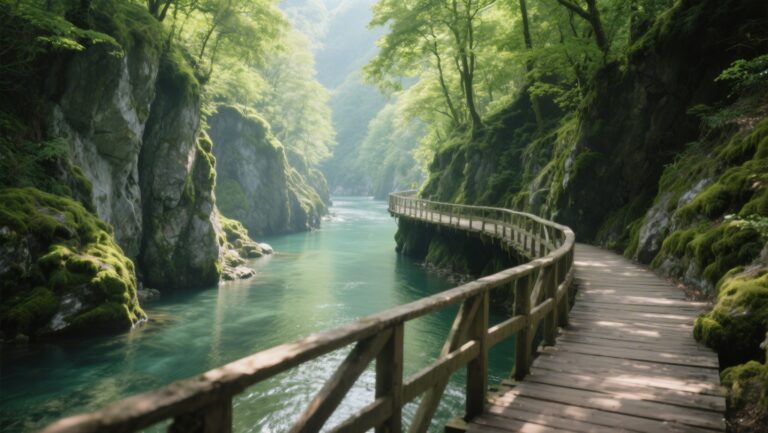
Vintgar Gorge is a narrow gorge carved out by the River Radovna. Wooden walkways and bridges lead you over the water, past small waterfalls and deep pools. The rock walls rise up on both sides, sometimes only a few metres apart.
The walk through the gorge is 1.6 kilometres long and ends at the Šum Waterfall. This waterfall drops 13 metres into a wide pool. The path is well maintained and suitable for families. Some sections are narrower and can be slippery, so sturdy shoes are a good idea.
It takes about an hour to walk through the gorge without long stops. Allow another half hour for photos and to view the waterfall. After the waterfall you walk back along the same path or choose a circular route through the forest back to the entrance.
Vintgar Gorge is four kilometres from Bled. You can walk, cycle or drive there. Parking at the entrance costs a small fee. There is an entrance charge, but it is modest. The gorge is open from April to October. In high season it is busy between 10:00 and 15:00. Visit early in the morning for peace and the best light for photos.
Combine Vintgar with a visit to Bled. It makes for a wonderful full day: start with a walk through the gorge, have lunch in Bled and finish with a boat trip to the island or a walk around the lake.
Read more: Vintgar Gorge
Lake Bohinj: peace, space and mountain scenery
Lake Bohinj lies deeper into Triglav National Park than Bled. It is larger, quieter and has a wilder character. Where Bled feels fairytale-like, Bohinj feels wild and untamed. The mountains press closer to the water, the landscape is greener and the atmosphere less touristy.
Bohinj invites you to relax and enjoy the outdoors. You can swim along the shores, where the water is clear and cold. Kayaking and stand-up paddleboarding are popular. You can hire equipment from rental points along the lake. Cycling around the lake or through the valley is pleasant, with little elevation gain and beautiful views.
Picnicking by the water is a lovely way to enjoy the surroundings. The spot by the Church of St John at the western side of the lake offers peace and a beautiful backdrop. The bridge over the Savica River is a popular place for photos.
From Bohinj you can reach the Slap Savica waterfall. This waterfall plunges 78 metres into a narrow gorge. The walk from the car park takes about 20 minutes and climbs steeply up steps. The waterfall is impressive, especially in spring when the snow melts.
The Mostnica Gorge is also nearby. You can easily combine both attractions in one day. Start with a morning at the lake, walk through the gorge in the afternoon and finish at the waterfall, or the other way round.
Bohinj is at its best in spring and autumn. In May and June the alpine meadows are in bloom. The colours are vivid and it is wonderfully quiet. In September and October the forests change colour and temperatures are pleasant. In summer it is busier, but still quieter than Bled. Winter months bring snow and peaceful walks, but not all facilities are open.
Read more: Lake Bohinj
‘ That lack of fame makes it a wonderful spot for anyone seeking peace and quiet. ’
Mostnica Gorge: hidden gem near Bohinj
The Mostnica Gorge is narrower and wilder than Vintgar. The river has carved tight channels and deep potholes into the rock. Little bridges and paths take you over the water and between the rocks. The water is crystal-clear and green, the surroundings quiet and lush.
The gorge is less well known than Vintgar and attracts fewer visitors. That lack of fame makes it a lovely place for anyone looking for tranquillity. The walk through the gorge takes around 45 minutes to an hour, depending on your pace. The path is generally good, but there are steeper sections and steps. Sturdy walking boots are essential.
You can easily combine the Mostnica Gorge with a day at Lake Bohinj. The gorge lies a few kilometres from the lake. You can park at the entrance, where a small fee is charged. The gorge is accessible from May to October, depending on the weather.
Children can join, but younger children need supervision on the narrower paths and by the water. There is little shade in the gorge, so take water and wear sun cream in warm weather.
Read more: Mostnica Gorge
The Soča River and valley: turquoise paradise for outdoor lovers
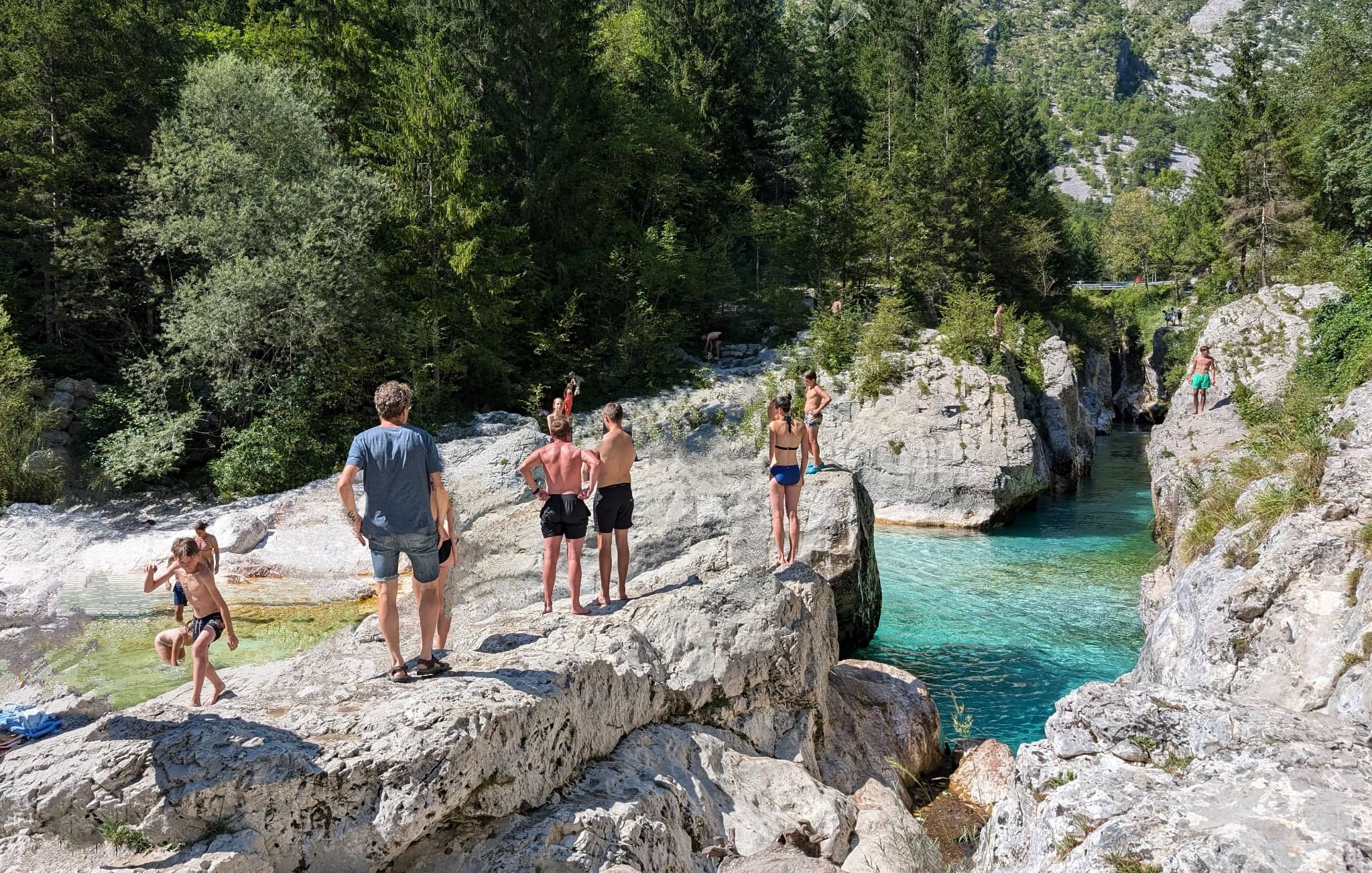
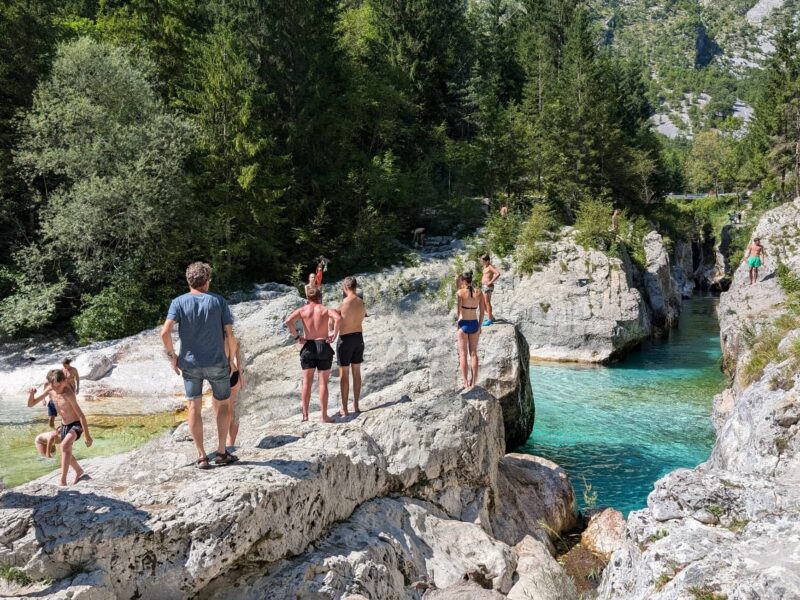
The Soča River is one of the most beautiful rivers in Europe. Its turquoise colour is caused by minerals in the water and the clear meltwater from the mountains. The river flows through deep gorges, over shingle beds and along green valleys.
The Soča Valley is a playground for outdoor enthusiasts. Rafting and kayaking are the most popular activities. The river offers different grades, from gentle stretches suitable for beginners to wild rapids for more experienced paddlers. Companies in Bovec offer trips including equipment and guide.
Canyoning combines swimming, climbing and jumping in the Soča’s tributaries. You make your way through a gorge, jumping into deep pools and sliding over smooth rocks. It is an active way to experience nature.
Walking along the river is calmer but just as impressive. The Soča Trail runs alongside the water and offers views of the turquoise river, deep gorges and waterfalls. Individual sections range from short walks to longer hikes of several hours.
The source of the Soča lies near Trenta. You reach the spring along a short walk through the forest. The water bubbles up from the rocks into a small pool. It is a magical beginning to the river.
Key places in the Soča Valley are Bovec, the centre for outdoor activities, and Kobarid, known for its First World War history and an excellent museum. Trenta is quieter and close to Triglav National Park.
The Soča Valley fits easily into a road trip. Combine it with Lake Bohinj via the Vršič Pass, a spectacular mountain road with 50 hairpin bends. The pass is easily driveable in summer but demands careful driving. The views along the way are phenomenal.
Read more: Soča River and valley
Tolmin Gorge: rugged nature in the Soča Valley
Tolmin Gorge is the lowest entrance point to Triglav National Park. Two rivers, the Tolminka and the Zadlaščica, meet here in a narrow gorge with high rock walls. Wooden bridges and paths lead you through the gorge, past rapids and beneath overhanging rocks.
Tolmin Gorge feels wilder than Vintgar or Mostnica. The gorge is narrower, the rocks higher and the atmosphere more authentic. There are fewer visitors, so you experience more peace and quiet. The walk through the gorge takes about an hour and a half. The path includes steps, bridges and steeper sections. Sturdy shoes are essential.
Highlights include Hudičev Most (Devil’s Bridge), a natural stone bridge spanning the river, and the Thermal Spring, where warm water emerges from the rocks. Both spots are wrapped in legends and stories that local guides are happy to share.
You can easily combine Tolmin Gorge with other attractions in the Soča Valley. Kobarid is a short distance away, as is the Soča River itself. Plan a day in the region with a morning in the gorge, lunch in Kobarid and an afternoon by the river or at the museum.
The gorge is open from April to October. In spring the water level is high due to melting snow, making the waterfalls more impressive. In summer it is drier but pleasantly warm for walking. You can park at the entrance, where you pay an admission fee.
Read more: Tolmin Gorge
‘ The Logar Valley is one of the most beautiful glacial valleys in Europe. ’
National parks and nature areas: Triglav and beyond
Triglav National Park is Slovenia’s only national park and covers most of the Julian Alps. The park is named after Mount Triglav, at 2,864 metres the country’s highest peak. The park protects alpine meadows, glacial lakes, waterfalls and ancient forests.
Climbing Mount Triglav is an experience many Slovenians undertake at least once. The route demands fitness and mountain experience. The most commonly used route starts from Pokljuka or the Krma Valley and takes two days, with an overnight stay in a mountain hut. From the summit you can see Slovenia, Italy and Austria.
If you do not want to go that high, the park offers plenty of other walks. The Juliana Trail is a long-distance route encircling the park. Stages vary from 10 to 20 kilometres. You walk through valleys, along rivers and over mountain passes. Each section can also be walked individually.
The Vršič Pass is Slovenia’s highest mountain road and links the Soča Valley with Kranjska Gora. The road has 50 hairpin bends and climbs to 1,611 metres. Along the way there are viewpoints, chapels and starting points for hikes. The pass is an attraction in itself, but also a through-route to other sights.
Lake Jasna lies near Kranjska Gora and is a small glacial lake with clear water. The lake mirrors the mountains and offers a peaceful spot for a stroll or picnic. In summer you can swim, though the water is cold.
Outside Triglav there are other nature areas worth visiting. The Logar Valley is one of the most beautiful glacial valleys in Europe. The valley is wide and green, surrounded by high rock walls. Waterfalls plunge from the cliffs, including the Rinka Waterfall, which drops 90 metres.
The Strunjan Nature Reserve lies on the coast and protects salt pans, a lagoon and cliffs. It is a striking contrast with the mountains. Walking trails lead through the area, with views of the Adriatic Sea.
Responsible walking in the parks means staying on the paths, taking your rubbish with you and leaving nature undisturbed. Wild camping is not allowed in Triglav National Park. Stay overnight in mountain huts or on campsites. Booking ahead is sensible in high season. Mountain huts offer simple accommodation, often with hot meals.
Read more: National parks & nature areas
Waterfalls in Slovenia: from Slap Savica to hidden cascades
Slovenia has dozens of waterfalls, from famous to hidden gems. Slap Savica by Lake Bohinj is the best-known. The waterfall plunges 78 metres into a narrow gorge. The water comes from underground sources and melting glacial water from Triglav National Park. The walk to the waterfall takes 20 minutes and climbs up flights of steps. The view from the top is well worth the effort.
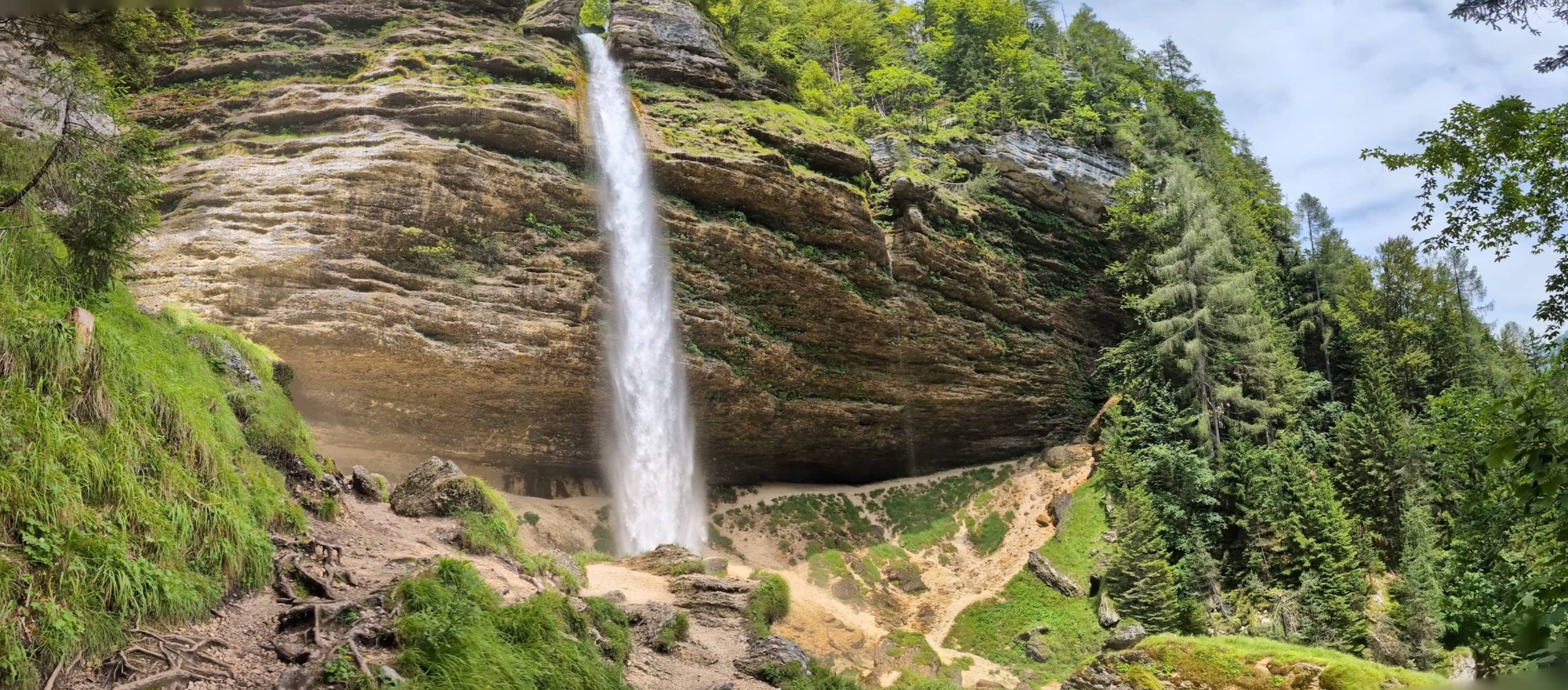
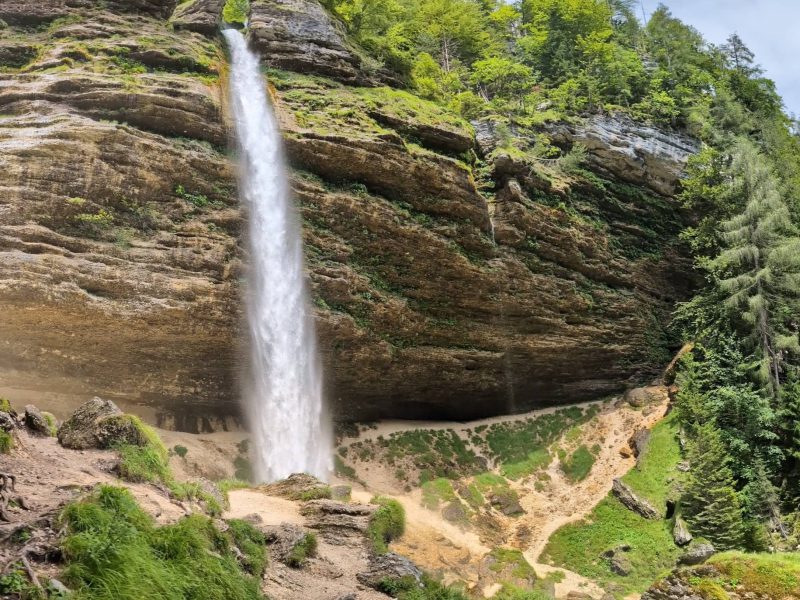
The Peričnik Waterfall near Mojstrana is easy to reach and spectacular. The waterfall drops freely over a rock wall, allowing you to walk behind it. In winter it freezes into a wall of ice. The walk is short and suitable for families.
The Rinka Waterfall in the Logar Valley is one of the highest in Slovenia. The water falls 90 metres from the mountain wall. You reach the waterfall along a walk through the valley, about an hour from the car park. The surroundings are impressive, with mountain pastures and high peaks.
Kozjak Waterfall near Kobarid is tucked away in a gorge. You walk through a narrow passage between rock walls to a green pool where the waterfall plunges down. Light filters through the trees, creating a special atmosphere. The walk takes around 20 minutes and combines well with a visit to Kobarid.
Waterfalls are at their most impressive in spring and early summer, when the snow melts and the water level is high. In summer the flow is lower, but the temperatures are more pleasant. In winter some waterfalls can freeze, creating a beautiful spectacle.
Think about safety. Paths can be slippery, especially when wet. Stay on the marked routes and do not stand too close to the edge. Some waterfalls require sturdy walking boots because of uneven terrain.
Read more: Waterfalls in Slovenia
The Postojna Caves: underground spectacle with train ride
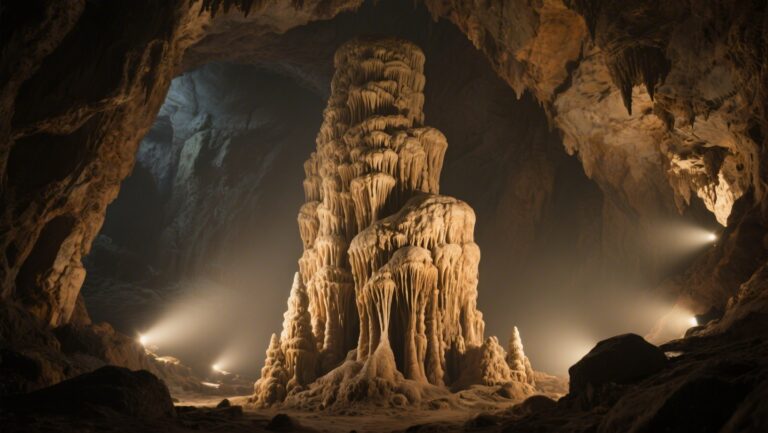
The Postojna Caves form one of the largest karst cave systems in the world. The network of passages, chambers and tunnels stretches over 24 kilometres. Part of it is accessible to visitors on a guided tour that begins with a ride on a little train.
The train takes you five kilometres deep into the cave. The ride takes about 10 minutes and passes stalactites, stalagmites and underground halls. It is a remarkable way to enter the caves and gives you a good sense of their size.
After the train ride you continue on foot through the passages. Guides lead the group past the most beautiful formations. The Great Mountain is a huge pile of stalagmites that looks like a mountain. The Concert Hall is a chamber with excellent acoustics where concerts are sometimes held. The Spaghetti Hall has long, thin stalactites hanging down like strands of spaghetti.
A special feature of Postojna is the olm, also called the human fish. This amphibian lives in the cave’s underground rivers and is blind and pale. Olms can live for more than 100 years. There is an aquarium in the cave where you can see them.
The tour lasts about an hour and a half. The temperature in the cave is a constant 10 degrees, so bring a jacket. The path is easy to walk but includes steps and slopes. The tour is suitable for families and less sporty travellers.
Postojna lies in central Slovenia and is easy to reach from Ljubljana. Combine your visit with Predjama Castle, which is 10 kilometres away. Combination tickets are available and save time and money. Allow half a day for the caves and castle together.
In high season it is busy. Book tickets online to avoid queues. Early morning or late afternoon is quieter than the middle of the day.
Read more: Postojna Caves
‘ The sheer scale of the space is overwhelming. ’
Škocjan Caves: UNESCO World Heritage and underground canyon
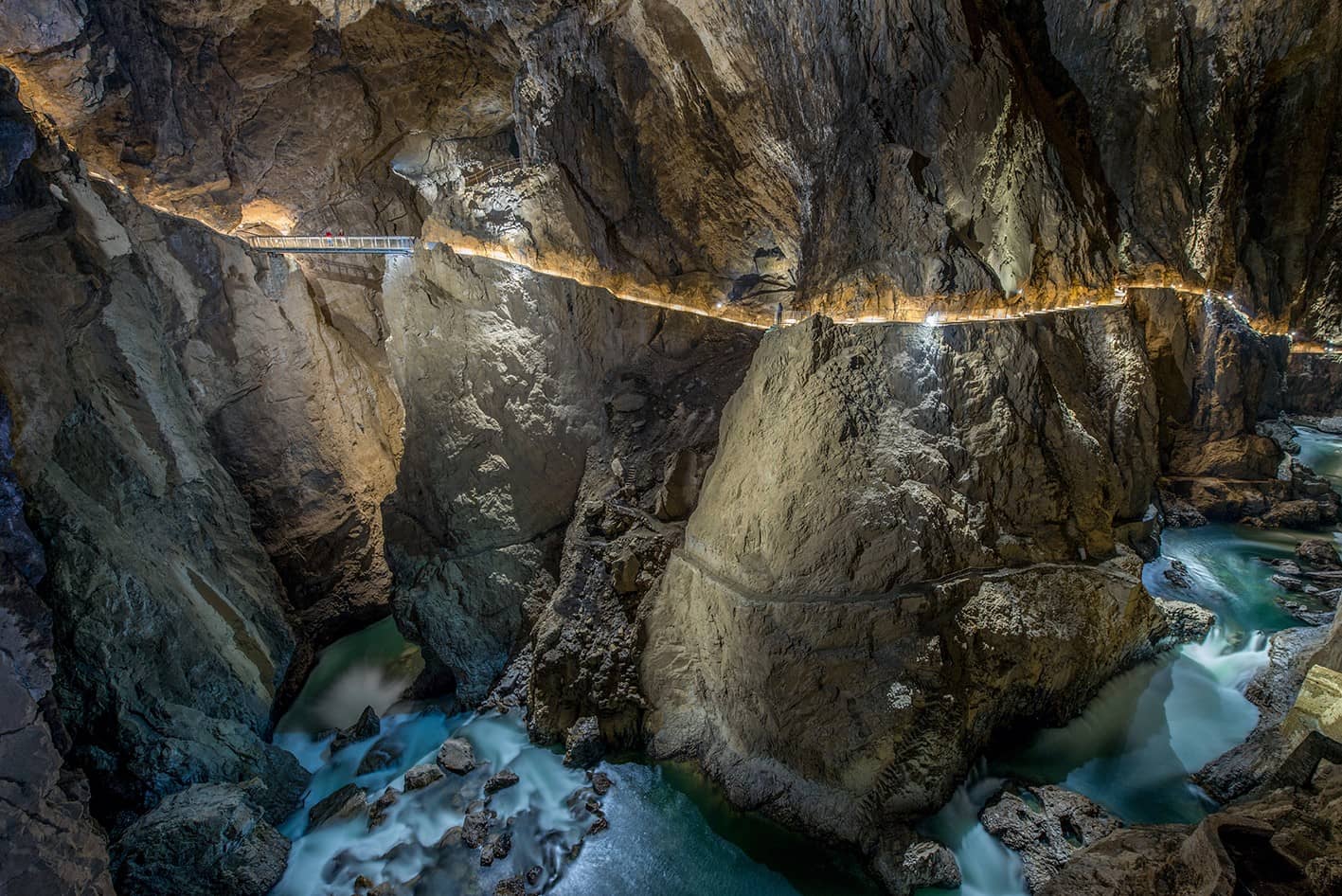
The Škocjan Caves are less well known than Postojna, but at least as impressive. The caves are on the UNESCO World Heritage List because of their unique underground canyon. The River Reka flows through the cave and has carved out a 146-metre-deep gorge.
You enter the cave through an opening in the rock. A path leads down, deeper and deeper into the earth. The sound of the river grows louder the further you descend. The Murmuring Cave is a long passage with small waterfalls and rapids.
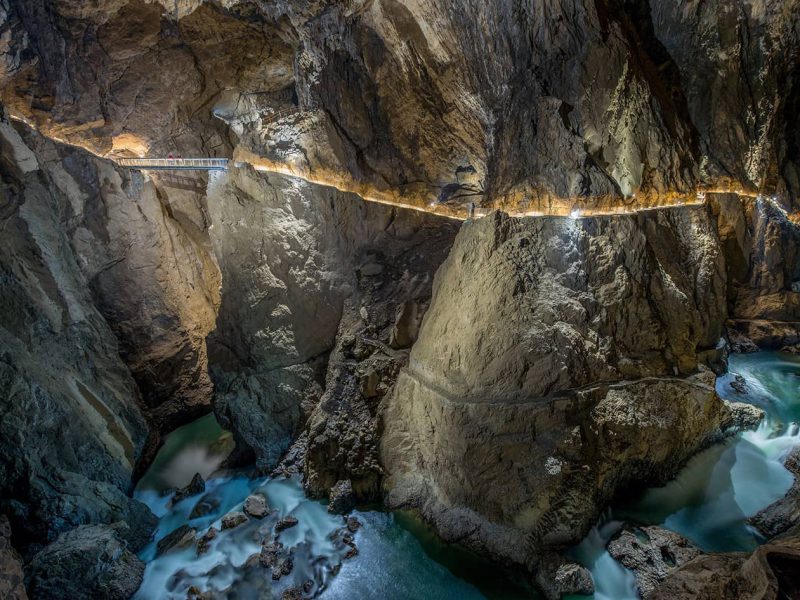
The highlight is the Cerkvenik Bridge, a suspension bridge that hangs 45 metres above the river. The bridge crosses the underground canyon. On both sides the walls drop sheer down. The view is dizzying and impressive. The sheer scale of the space is overwhelming.
After the bridge you continue through passages and chambers. The Great Hall is a chamber 120 metres high. Stalactites hang from the ceiling, but because of the height they appear small. The path climbs back up via steps, returning you to daylight.
The tour lasts around two hours and involves more walking and stair climbing than Postojna. It is more adventurous and less touristy. The caves are suitable for children from about six years upwards, but younger children may find the walk too long or a bit scary.
The temperature in the cave is around 12 degrees. Bring warm clothing. The humidity is high, which can make it feel colder. The path is well maintained but has many steps.
Škocjan lies in the south-west of Slovenia, on the route to the coast. Combine your visit with a stop in Piran or Lipica, where the famous white Lipizzaner horses come from. The caves are less busy than Postojna, especially outside the summer months.
Read more: Škocjan Caves
Castles in Slovenia: from cliff castles to lakeside strongholds
Slovenia has more than 500 castles, from ruins to well-preserved strongholds. Many castles occupy strategic locations: hills, rocky outcrops or high above valleys. They tell stories of knights, sieges and medieval rulers.
Predjama Castle is Slovenia’s most unique castle. It is built in the mouth of a cave, against a 123-metre-high cliff. The castle seems to grow out of the rock. Knight Erazem lived here in the 15th century and used secret tunnels in the cave to outwit his enemies.
You visit the castle on a guided tour. Rooms, kitchens and the chapel are furnished as they were centuries ago. The secret tunnel behind the castle is accessible in summer. The combination of castle and cave makes Predjama special. Combination tickets with the Postojna Caves are available.
Bled Castle stands above Lake Bled and offers panoramic views. The castle has a museum about the region’s history. In the courtyard there is a medieval printing press where you can make your own certificate. The terrace is a popular place for photos.
Ljubljana Castle crowns a hill above the capital. You reach the castle by funicular, on foot or by tourist train. The castle has a viewing tower, a museum and restaurants. The view over Ljubljana and the surrounding area is beautiful. In the evenings there are sometimes events and concerts.
Other noteworthy castles include Celje Castle, one of the largest ruins, and Otočec Castle, which stands on an island in a river and is now a hotel. Ptuj Castle in the town of the same name combines history with a beautiful historic centre to wander through.
Castles are scattered all over Slovenia and are easy to combine with other sights. Plan a visit between days in nature or on a rainy day. Many castles charge an entrance fee, but it is usually modest. Guided tours are available in English or Slovene.
Read more: Castles in Slovenia
Museums and art: a dose of culture amid all the greenery
Slovenia has a rich culture and history that you can explore in its museums and galleries. Ljubljana is the cultural heart, home to the National Museum of Slovenia and the Museum of Modern Art. The National Museum displays archaeological finds, from prehistoric objects to Roman treasures. The Museum of Modern Art focuses on Slovenian and international 20th‑century art.
The City Museum of Ljubljana tells the story of the city from Roman times to the present day. The museum is housed in a beautifully restored building and combines exhibitions with a café and shop.
In Kobarid you will find the Kobarid Museum, dedicated to the First World War. The Isonzo Front ran through the Soča Valley and was the scene of fierce battles. The museum exhibits uniforms, weapons and personal stories. Outside the museum you can visit trenches and memorials. The museum is informative and respectfully designed.
Ptuj, one of the oldest towns in Slovenia, has an archaeological museum in its castle. The collection displays Roman and medieval objects. The town itself is well worth a walk, with old houses and a lively square.
Open‑air museums offer a different experience. The Slovenian Open‑Air Museum in Rogatec showcases traditional farms, workshops and ways of life. You stroll through the grounds and see how people lived and worked centuries ago.
You will also find art in galleries and cultural centres across the country. Ljubljana has a lively arts scene with exhibitions, theatres and concerts. The Metelkova district is an alternative cultural hotspot full of street art, music and bars.
Museums and culture provide a nice change from days out in nature. In bad weather, museums are an excellent option. Most museums have moderate entrance fees and offer exhibitions in English or with English‑language audio guides.
Read more: Museums & art
‘ That variety is what makes your holiday complete. ’
How to combine the sights in your itinerary
Slovenia is small enough to combine different regions without long drives. A trip of one to two weeks gives you enough time to see the highlights and enjoy your surroundings.
A week in Slovenia might look like this: start in Ljubljana with a day in the capital. On the second day drive to Bled for the lake, the castle and Vintgar Gorge. Spend day three in Bohinj with the Mostnica Gorge and Slap Savica. On day four drive over the Vršič Pass to the Soča Valley. Spend two days on outdoor activities or walks along the river. On day six visit the Postojna Caves and Predjama Castle. Finish with a day on the coast in Piran.
Ten days gives you more room for depth. Add an extra day in the Soča Valley for canyoning or rafting. Spend a day in Triglav National Park on a longer hike or with a visit to the Logar Valley. Take time for smaller places such as Ptuj or a wine region like Goriška Brda.
Two weeks gives you real luxury. You do not need to change location every day and can stay several nights in the same place. This brings calm and space to relax. You can also visit lesser‑known areas, such as the Karst region with its wines and rolling green hills, or the Pannonian region in the east.
The best time to travel depends on your interests. May to September is ideal for walking, swimming and outdoor activities. July and August are the busiest months. June and September offer pleasant temperatures with fewer tourists. May and October are beautiful for nature, with blossom or autumn colours. Winter months are perfect for winter sports and quiet walks, but some passes and attractions are closed.
Getting around Slovenia is easy. A car gives you the most freedom and reach. Roads are good and distances short. You drive from Ljubljana to Bled in an hour, to the coast in an hour and a half. Buses link the main towns, but for gorges and nature areas a car is more convenient. Hiring e‑bikes is an alternative if you like cycling and want some help on the hills.
Alternate active days with rest. Do not plan a big hike or activity every day. Give yourself time to enjoy the surroundings, sit at a pavement café or visit a market. That variety is what makes your holiday complete.
Handy tips for a carefree journey of discovery
Sights such as Bled and the Postojna Caves attract many visitors. Avoid the crowds by going early in the morning or late in the afternoon. Weekends in July and August are the busiest. Weekdays are quieter. Book tickets online for caves and popular attractions to skip the queues.
Gorges and waterfalls call for sturdy walking shoes. Paths can be slippery, especially after rain. Wooden bridges and steps are sometimes narrow. Take a bottle of water and dress in layers. Temperatures in gorges and caves are cooler than outside.
Mountains and national parks require preparation. Check the weather before you set off. Mountain weather can change quickly. Take a map or GPS and let someone know where you are going on longer walks. Stay on marked trails and respect nature. Take your rubbish with you; lighting fires is forbidden.
Sustainable travel in Slovenia is welcomed. The country is investing in green tourism. Support local products by buying honey, cheeses and wine directly from farmers. Markets in cities such as Ljubljana offer fresh, local produce. Eat in local restaurants rather than big chains. Use reusable bottles and bags.
You will find photo opportunities everywhere. Take the classic shot of Bled from Ojstrica or Mala Osojnica, viewpoints above the lake. Early morning gives the best light and mist over the water. The Soča River photographs beautifully from bridges or viewpoints along the road. Waterfalls are most photogenic in spring when the water level is high.
Local delicacies round off your visit. Try kremšnita in Bled, potica (a traditional rolled cake) throughout the country, and Karst ham and wine in the Karst region. Markets are the best places for fresh products and a lively atmosphere. Ljubljana’s market is open every morning and sells vegetables, fruit, flowers and local specialities.
Slovenia is safe and welcoming. People often speak English, especially in tourist areas. Slovene is the official language, but basic words such as hvala (thank you) and dober dan (good day) are appreciated.
Discover Slovenia with Go Slovenia
Combining Slovenia’s sights is easier when you have a guide who knows the region. Go Slovenia offers escorted tours and group trips where you experience the highlights without having to worry about logistics. You travel in small groups, stay in carefully selected accommodation and are accompanied by local experts who know the country inside out.
Go Slovenia designs routes that match what you are looking for. Do you want an active trip full of hiking and outdoor adventures? Or would you prefer a relaxed tour mixing culture and nature? You gain access to places that are hard to find on your own, experience Slovenian hospitality and enjoy a holiday where everything is taken care of. That gives you the freedom to fully enjoy the sights that make Slovenia so special.